70×30m Entertainment Floating Island
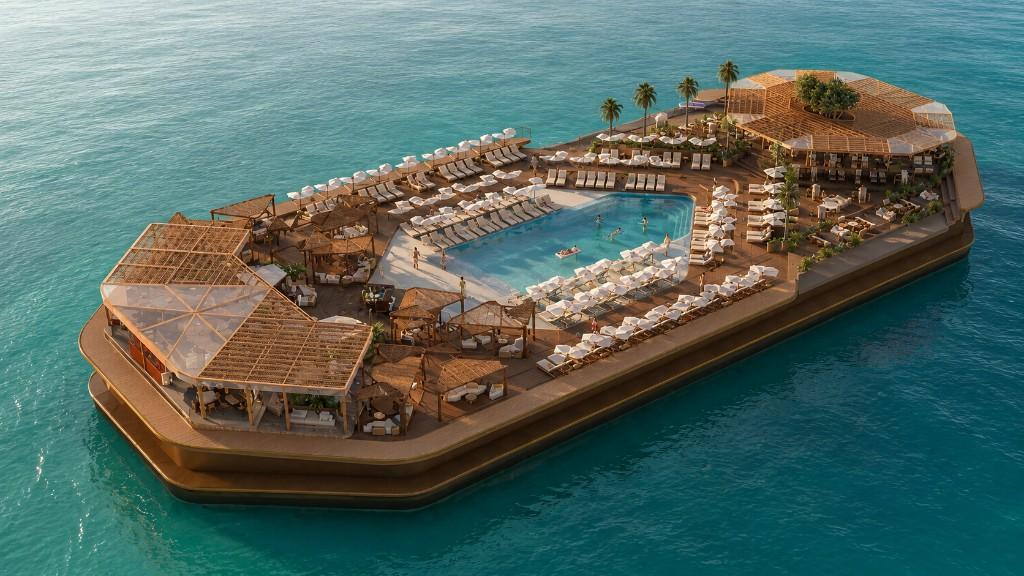
Naval architecture and design support for a large-scale modular entertainment floating platform (70m × 30m), covering hydrostatics, stability, mooring in semi-sheltered waters, hospitality layout coordination, and technical documentation for stakeholder review.
Asset type: Floating entertainment / hospitality platform
Region: Coastal developments (international program context)
Sector: Floating infrastructure / entertainment
Role: Naval Architecture & Design Support
Status: Public summary; detailed client data confidential
Project snapshot
Multi-purpose entertainment hub with amphitheater-style performance space, F&B zones, VIP areas, and utility cores built on reinforced pontoon foundations for coastal developments.
Problem
Integrate large hospitality and performance layouts with marine engineering constraints stability, mooring, utilities, and classification considerations without sacrificing safe station-keeping or stakeholder review readiness.
Technical context
70m × 30m modular floating platform with steel-reinforced pontoons and hybrid composite decking. Analyses included hydrostatics and stability for large occupiable areas, mooring and anchoring for semi-sheltered sites, and coordination of service cores with marine structural grids.
Commercial context
Coastal entertainment development with procurement strategies, vendor engagement, and documentation packages intended for stakeholder and classification review not only internal design iteration.
Deliverables
- Hydrostatics and stability analyses for large-scale platform
- Mooring and anchoring system studies
- Layout coordination integrating hospitality spaces with marine requirements
- Technical documentation and compliance reports for stakeholder review
Methods & frameworks
- Large-platform stability and mooring feasibility
- Hospitality–marine interface coordination
- Stakeholder-facing technical documentation
Outcome
Reduced hospitality–marine interface risk and clarified mooring and stability evaluation criteria for semi-sheltered operation; stakeholder documentation structured go/no-go evidence ahead of class and investor review cycles.
What this demonstrates
- Entertainment platforms amplify occupancy and layout risk for stability and mooring.
- Hospitality integration must be engineered, not overlaid on pontoons after the fact.
- Early stakeholder documentation reduces downstream class and investor friction.
FAQ
What is the 70×30m Entertainment Floating Island?
A large modular floating platform designed as a multi-purpose entertainment hub with performance, hospitality, and VIP zones supported by naval architecture for stability, mooring, and documentation.
Why is mooring critical for this asset type?
Large occupiable platforms in semi-sheltered waters require engineered station-keeping; mooring and anchoring studies are core to safe operation and stakeholder acceptance.
How should hospitality layouts relate to marine structure?
Performance, F&B, and VIP zones must align with pontoon grids, utility cores, and stability assumptions—layout-first overlays create late interface risk.
What documentation helps stakeholder review?
Hydrostatics, mooring studies, and compliance summaries packaged so investors and class advisors can evaluate feasibility without needing unreleased fabrication drawings.
Related topics
Related answers
Related services
Related FAQ
Specific site names, commercial terms, and unreleased drawings are omitted. Public imagery and project title describe the asset for accessibility; detailed drawings remain confidential.
This case study summarizes public professional work for educational context only — not engineering, legal, or financial advice. Confidential metrics may be omitted. Verify applicability to your jurisdiction and engagement scope before booking.