Lapillus Floating Suite
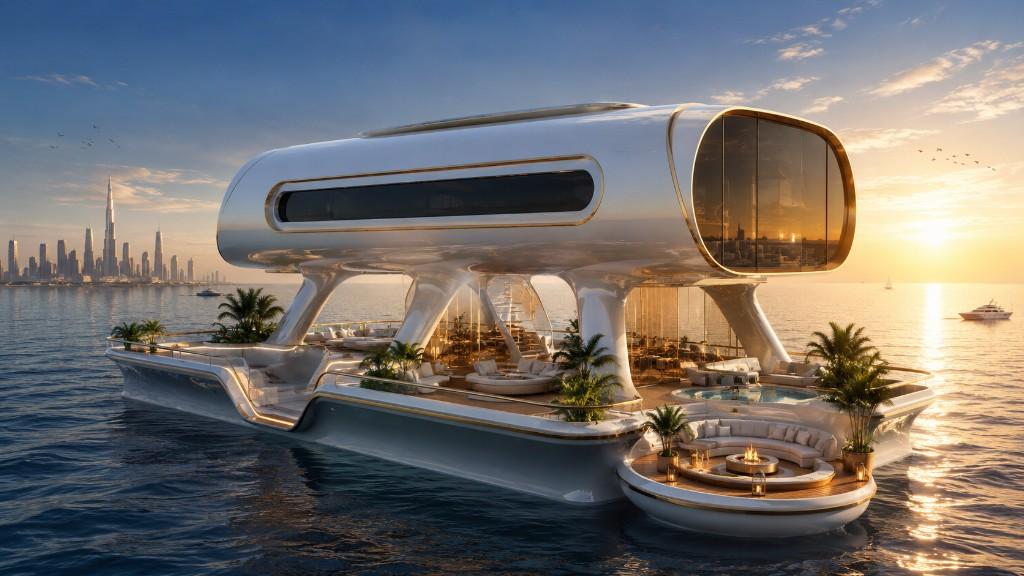
Naval architecture and project delivery support for a luxury trimaran floating suite (20m × 8m), including hydrostatics, stability, mooring analyses, structural integration of composite hull elements, and compliance documentation for coastal deployment.
Asset type: Floating hospitality / luxury suite
Region: Coastal waters (GCC-adjacent program context)
Sector: Floating infrastructure / hospitality
Role: Naval Architecture & Project Delivery
Status: Public summary; detailed client data confidential
Project snapshot
20m × 8m trimaran-style floating lounge with composite hull elements, panoramic glazing, and sustainable utility provisions developed in collaboration with Waterstudio.NL for urban floating cluster concepts.
Problem
Deliver a compact luxury floating suite where architectural intent, composite fabrication routes, and marine compliance had to align within a fast-moving concept-to-fabrication schedule.
Technical context
Trimaran platform with 3D-printed ASA/HDPE composite hull elements and reinforced steel columns. Engineering workstreams included hydrostatics, stability, mooring for coastal station-keeping, HVAC and electrical load integration, and structural interfaces between composite and steel systems.
Commercial context
Urban floating cluster development context requiring procurement RFQs, vendor coordination, and fabrication scheduling aligned to stakeholder milestones not only design calculations.
Deliverables
- Hydrostatics, stability, and mooring analyses
- Structural integration support for composite–steel interfaces
- Procurement RFQs and compliance documentation for class and stakeholder review
- Project management oversight on fabrication scheduling and installation planning
Methods & frameworks
- Concept-to-detailed design coordination
- Class-facing documentation preparation
- Marine EPC interface tracking between design, yard, and vendors
Outcome
Reduced composite–steel interface risk and aligned a class-facing documentation pathway for coastal deployment; hydrostatics, stability, and mooring packages clarified go/no-go evidence for stakeholder and classification review cycles.
What this demonstrates
- Floating hospitality assets require early stability and mooring discipline not layout-first design.
- Composite fabrication routes demand explicit structural interface ownership.
- Project delivery skills are as critical as calculations on compact floating suites.
FAQ
What is the Lapillus Floating Suite?
A 20m × 8m trimaran-style floating lounge designed for luxury coastal deployment, with composite hull elements and integrated hospitality systems supported by naval architecture and delivery coordination.
What engineering scope applied to this project?
Hydrostatics, stability, mooring, structural integration between composite and steel elements, utilities load coordination, and class-facing compliance documentation.
Why are composite–steel interfaces a delivery risk?
Different materials and fabrication routes create load-path and tolerance gaps. Explicit interface ownership early reduces rework between architects, fabricators, and yards.
How does this work support class and stakeholder review?
Analyses and documentation are packaged so reviewers can assess coastal station-keeping and structural intent without treating concept material as a finished approved design.
Related topics
Related answers
Related services
Related FAQ
Client names, contractual values, and unreleased drawings are omitted. Public imagery and project title describe the asset for accessibility; detailed drawings remain confidential.
This case study summarizes public professional work for educational context only — not engineering, legal, or financial advice. Confidential metrics may be omitted. Verify applicability to your jurisdiction and engagement scope before booking.